What Is a Nature Kindergarten and Is It Right for Your Child
Discovering Nature Kindergarten for Wanora Families
A nature kindergarten is a kindergarten program where the natural world is the main classroom. Children spend most of their day outdoors in bushy, garden and open play spaces, guided by qualified early childhood teachers who use play and nature as the starting point for learning. It is a style of kindy that is becoming increasingly popular with families around Ipswich and Brisbane who want something calmer, slower and more connected for their children.
At Eskay Kids, our centres near Wanora follow this nature-based way of working. Even though our services sit just outside the suburb itself, many Wanora families choose us because they are looking for a nature kindergarten feel without having to travel far. Children learn through play, in mud kitchens and sand, under trees and on open grass, with educators who understand both the curriculum and the local environment.
This article is set out like an FAQ. We will answer the questions families in and around Wanora usually ask when they first hear about a nature kindergarten, so you can decide if it might be a good fit for your child.
What Exactly Is a Nature Kindergarten?
At its simplest, a nature kindergarten is a government-approved kindergarten program that happens primarily outdoors. Instead of the classroom being four walls and a carpet, the classroom is the yard, the trees, the garden beds, the logs, the sky and the weather.
Here is how it typically differs from a more traditional kindy setting:
- Children spend long stretches of time in natural outdoor spaces.
- Play is mostly child-led, with educators following the child’s ideas.
- There are fewer plastic, battery-operated toys and more real materials like sticks, rocks, mud, water, fabric and loose parts.
- The environment itself is used to spark thinking about maths, science, language, art and caring for country.
A nature kindergarten still follows the Queensland Kindergarten Learning Guideline and the Early Years Learning Framework. That means:
- Early literacy is supported through stories, drawing, mark-making, symbols and rich conversations.
- Numeracy shows up in counting, sorting, measuring, comparing and patterning in real-life play.
- Social and emotional learning is woven into every part of the day, as children learn how to get along, manage big feelings, and solve problems with others.
Parents often ask, “Is it just kids running around outside all day?” There is plenty of play and freedom, but it is not a free-for-all. Educators plan experiences and environments, hold group times, tell stories, sing songs and introduce ideas. There is a loose structure to the day, with predictability and routines, just not rigid blocks and worksheets.
There are also intentional small group times, for example:
- Yarning circles under a tree.
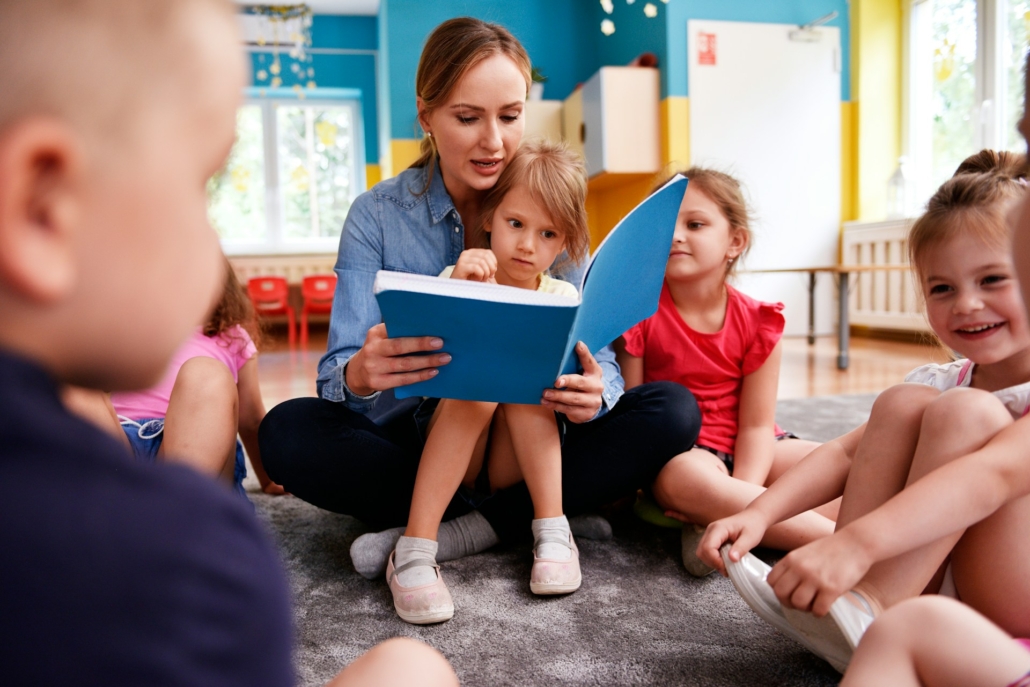
- Shared reading on a blanket.
- Simple games that build listening or memory skills.
So yes, there are lessons, but they are lived and experienced, not just delivered on a whiteboard.
How a Typical Day in Nature Kindergarten Works
Families often want to know what a normal day looks like at a nature kindergarten in Wanora or nearby. While every service is slightly different, there is a gentle rhythm that children can count on.
A typical day might include:
- Arrival and unhurried greetings with educators and friends.
- A morning gathering or meeting, often in a circle outside.
- Long periods of outdoor play in different spaces.
- Shared meals, often eaten together as a group.
- Quiet rest or relaxation, which might be on stretchers, hammocks or mats in shaded areas.
- Closing circles or reflection times, where children talk about their day.
Educators balance child-led exploration with intentional teaching. They watch what children are interested in, then add:
- Questions that stretch thinking.
- Tools or materials that deepen the play, such as clipboards, magnifying glasses or books.
- Language that links what is happening to concepts like number, pattern, change or care.
Practical routines are carefully thought through. Toileting and handwashing are set up so children can manage them safely and hygienically, even when they are outside. Sun safety is a daily priority with:
- Hats and sun-safe clothing.
- Shade from trees and built structures.
- Regular sunscreen application.
Families also ask what happens in different weather. In Queensland, all-weather play usually means we keep children outdoors in light rain and cooler temperatures, with appropriate clothing and shelter, but adjust plans in extreme heat or storms. There is often access to indoor or more sheltered areas when needed, and children can move between spaces with support.
Questions about freedom to roam come up a lot. Children are given room to move and explore, but within clear boundaries and supervision plans. Mixed ages and different abilities are supported through flexible groupings, adaptation of activities, and close relationships between children, educators and families.
Learning Benefits You Can Expect to See
Many families choose a nature kindergarten in Wanora’s region because of the changes they notice in their child over time. The benefits show up in small everyday ways rather than big dramatic shifts.
Common developmental gains include:
- Increased confidence as children learn they can climb, balance, dig, create and solve problems.
- Stronger physical skills like coordination, strength and spatial awareness.
- More resilience, as children cope with changing weather, uneven ground, and the ups and downs of group play.
- Rich creativity, because there are fewer fixed toys and more open-ended materials.
Nature play connects closely with the curriculum. For example:
- Literacy appears when children tell stories about their play, make signs for their cubbies, or listen to books linked to what they are doing.
- Numeracy grows in real contexts like counting how many cups of water fill a bucket, comparing stick lengths, or working out how many friends can fit in a shelter they built.
- Science is everywhere in conversations about insects, plants, seasons, shadows, cause and effect and simple experiments.
Social and emotional skills tend to flourish outside. Children negotiate rules for games, share tools, work together to move heavy logs or build shelters, and comfort each other when things feel hard. Spending time in nature often builds a deep respect for country and the environment, especially when educators model gentle care for plants and animals.
A big FAQ is, will my child be school-ready after a nature kindy? School readiness is not just knowing letters or numbers; it is being able to:
- Focus reasonably well.
- Manage basic self-care.
- Communicate needs and ideas.
- Cope with changes and challenges.
Nature kindergarten supports all of these. For shy children, the open space and slower pace can feel less overwhelming than a busy indoor room. For very active children, there is room to move and climb in safe ways. Children with additional needs are supported through relationships, adjustments and collaboration with families and other professionals where appropriate.
Safety, Weather and Practical Concerns Answered
Safety is one of the first questions families ask, especially when they hear about climbing trees or using real tools. At Eskay Kids, qualified early childhood teachers and educators supervise carefully and think in terms of risk-benefit, not just risk alone.
This looks like:
- Assessing activities such as climbing or using hammers and saws so the benefit to learning and confidence is clear and the risk is managed.
- Staying close enough to guide and support, while still allowing children to test their abilities.
- Keeping group sizes and ratios within approved limits.
Weather is another big topic. All-weather play does not mean ignoring children’s comfort. It means we:
- Ask families to send clothing suited to sun, wind and rain.
- Use shelters, shade and indoor spaces as needed.
- Adjust plans when temperatures or conditions are not safe.
Cleanliness and health questions come up often: what about mud and germs? Regular handwashing, toileting routines and attention to hygiene are part of every day. A bit of mud on clothes or under fingernails is normal, but so is cleaning up before eating and when leaving for home. Many families feel that regular outdoor time supports strong overall wellbeing.
Practically, parents want to know what their child needs to wear and bring. Each service has its own list, but it usually includes:
- Sun-safe clothing, including a hat.
- Closed-in shoes that can handle dirt and uneven ground.
- A change of clothes, and sometimes wet-weather gear.
Children do get dirty, but most parents quickly see those stains as signs of a full and active day. In bush-like areas, wildlife such as insects and sometimes reptiles are considered in planning. Educators check spaces, teach children how to behave respectfully around animals, and follow clear procedures if issues arise.
Enrolment, Costs and Government Funding
Families often ask how a nature kindergarten in Wanora or the surrounding area fits within the Queensland early childhood system. The enrolment process typically involves:
- Join a waitlist or register your interest.
- Confirm that your child meets the age requirements for kindergarten.
- Attend an orientation visit so your child can see the environment with you there.
- Plan a settling-in period, where your child builds trust with educators at a pace that suits them.
Families ask if children can attend part-time, or if siblings can be at the same service. This depends on places and session structures, but many centres work with families to coordinate where they can. If your child has not been in care before, educators will take time to get to know you and your child, and to plan gentle starts that help everyone feel comfortable.
Taking the Next Step with Nature Kindergarten
Choosing a nature kindergarten in Wanora’s region comes down to values and fit. If you want your child to have long, unhurried play in natural spaces, strong relationships with educators, and a childhood that includes mud, trees and open skies, this approach may feel right for your family.
For many children, this kind of environment offers a different pathway to the same goal, a confident start to school and life. They still learn the foundations for literacy and numeracy, but do it through play that feels meaningful and joyful. Observing a group in action, asking questions, and picturing your own child in the space are often the best ways to decide if a nature kindergarten is right for you.
Give Your Child A Confident Start In Nature-Rich Learning
If you are ready to explore how play in the bush, mud and fresh air can support your child’s growth, we invite you to discover our nature kindergarten in Wanora. At Eskay Kids, we work alongside children so they can build resilience, curiosity and a genuine love for learning outdoors. contact us to talk with our team about enrolment options and what a typical day looks like for your child.